

How to Wash and Maintain Designer Streetwear
Table of Contents
- Why Designer Streetwear Demands Different Care
- Understanding Care Labels and Fabric Composition
- How to Wash Heavyweight Cotton Tees Without Damage
- Air Drying vs Machine Drying Streetwear: The Right Method
- How to Remove Stains From Hoodies and Preserve Graphics
- Storage Solutions That Protect Shape and Extend Garment Life
- Maintaining Resale Value Through Intentional Care
- Conclusion
- Frequently Asked Questions
Last Updated: September 26, 2026
Why Designer Streetwear Demands Different Care
Premium streetwear is an investment built to last. Understanding how to wash and maintain designer streetwear protects both the garment and the statement it makes.
Heavyweight fabrics like 9 oz ring-spun cotton and 16.5 oz French terry require different care than basics. Durability depends on respecting the construction through proper washing methods.
Understanding Care Labels and Fabric Composition
Every care label is the manufacturer's instruction for preserving integrity. It specifies fiber content, water temperature, and drying restrictions. Understanding the label requires knowing how different streetwear fabrics behave under stress.
Designer streetwear uses four primary fabric types, each with distinct care requirements:
Heavyweight Cotton (9 oz to 14 oz ring-spun) Ring-spun cotton is twisted during production for durability and shrinkage resistance. Cold water is essential; heat causes uneven fiber contraction, leading to permanent 3-5% shrinkage on the first wash. Warm water permanently reduces fit.
Cotton-Polyester Blends (80/20 or 70/30 ratios) Polyester blends reduce shrinkage to under 2% but respond poorly to heat. Machine drying can melt polyester fibers, creating irreversible stiffness. Air drying is always safer for blends, even if the label permits machine drying.
French Terry and Fleece (14 oz to 16.5 oz) French terry's looped interior is prone to pilling under heat or friction. Machine drying causes uneven compression, creating matted appearance after two or three cycles. Air drying is non-negotiable to preserve interior texture.
Nylon and Technical Fabrics Nylon is hydrophobic and requires mild detergent with thorough rinsing to prevent soap residue. Cold water is essential, and water-resistant coatings can be damaged by hot water or aggressive agitation.
| Fabric Type | Shrinkage Risk | Heat Sensitivity | Drying Method | Detergent Notes |
|---|---|---|---|---|
| Heavyweight cotton (9-14 oz) | 3-5% if warm water used | High | Hang dry only | Mild detergent, no softener |
| Cotton-poly blend (80/20) | Under 2% | Very high (polyester melts) | Air dry recommended | Mild detergent, avoid softener |
| French terry (14-16.5 oz) | Low (pre-shrunk) | Very high (pilling) | Lay flat or hang | Mild detergent, extra rinse |
| Nylon | Minimal | Medium | Hang dry | Mild detergent, thorough rinse |
The care label is a resale asset. Keep it intact and photograph it clearly for resale listings.
How to Wash Heavyweight Cotton Tees Without Damage
Turn the garment inside out before washing. This protects the graphic print from friction and direct water exposure, the primary causes of fading and cracking.
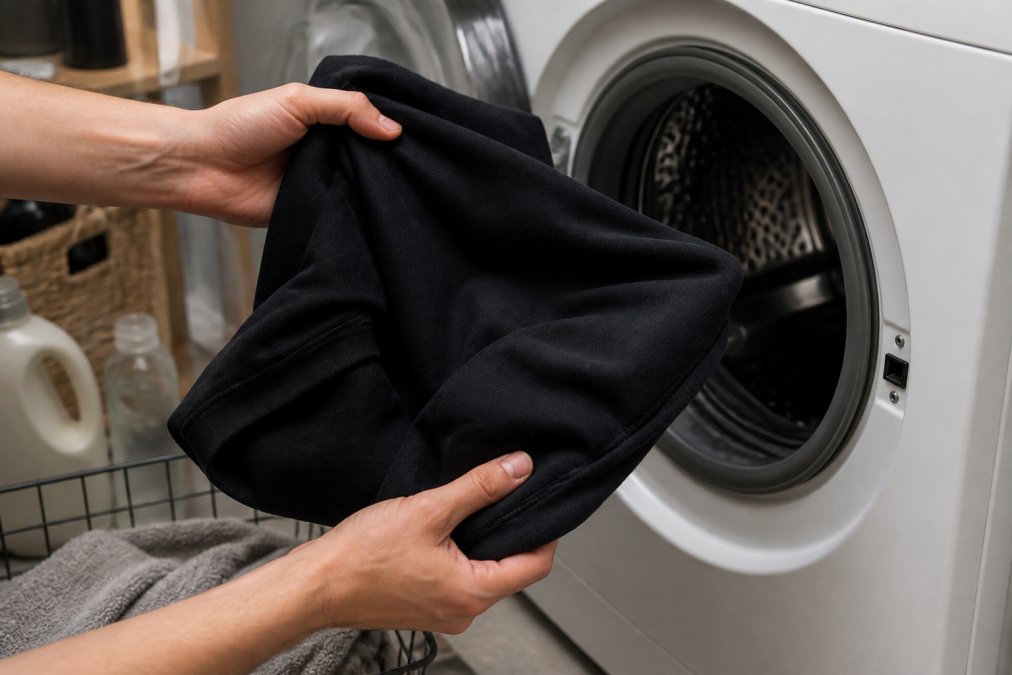
Use cold water exclusively. Add mild detergent, avoid bleach and fabric softeners. Consider a mesh laundry bag for graphic prints.
Select a delicate cycle to reduce agitation and prevent stitching damage. Spot clean visible stains before washing to avoid multiple wash cycles.
Remove the tee immediately after washing to prevent mildew and color setting. Hang dry or lay flat with good air circulation.
Air Drying vs Machine Drying Streetwear: The Right Method
Machine drying, even on low heat, damages fibers, causes shrinkage, and accelerates fading. It's the primary reason graphics crack and peel.
Hang drying is ideal for tees and lighter pieces. Use wooden or padded hangers to prevent indentations and maintain shoulder shape.
Flat drying works for pieces prone to stretching. Lay on a clean surface with good air circulation, reshape to original dimensions, and allow to dry completely.
Never use a dryer. Tumbling causes wear and any heat accelerates degradation. Most pieces dry within 24 hours with adequate air circulation.
How to Remove Stains From Hoodies and Preserve Graphics
Act immediately on stains. Never apply heat, which sets stains permanently. Blot with a clean cloth; don't rub, which spreads the stain.
Oversized Heavyweight Streetwear Tee →
The Immediate Response Protocol For fresh stains, rinse with cold water from the back, pushing the stain out. For stubborn stains, apply mild detergent and let sit 15-30 minutes. Patience is more effective than scrubbing.
Common Streetwear Stains and Targeted Treatments
Ink and Pen Marks Apply 70% isopropyl alcohol to a clean cloth and dab gently (the CDC). Test on an inconspicuous area first. Rinse with cold water and mild detergent after treating.
Food and Beverage Stains Blot fresh stains immediately. For dried stains, soak in cold water for 10 minutes, then treat with mild detergent. For oily stains, apply dish soap, let sit 5 minutes, then rinse.
Sweat and Deodorant Stains For fresh stains, rinse with cold water and mild detergent. For set-in stains, create a paste of equal parts water and detergent, apply, and let sit 20 minutes. Never use bleach or oxygen-based cleaners.
Mud and Dirt Let mud dry completely, then brush off loose dirt. Rinse with cold water and treat with mild detergent if needed.
For stains on graphics, treat from the reverse side by placing the stained area face-down on a clean cloth, then applying cold water and mild detergent to the back. For stains directly on the graphic, contact a professional dry cleaner.
Keep a stain-removal kit accessible: cold water, clean white cloths, mild detergent, 70% isopropyl alcohol, dish soap, soft-bristled brush, plastic scraper, and paper towels. Fast response increases success and prevents permanent damage.
Never Use on Designer Streetwear Avoid these products entirely:
- Bleach (breaks down dyes, creates permanent discoloration)
- Oxygen-based cleaners (OxiClean, hydrogen peroxide; weakens fibers and fades colors)
- Fabric softener (coats fibers and prevents detergent from working)
- Hot water (sets stains permanently)
- Wire brushes or rough cloths (damages fibers and graphics)
After Treating a Stain Once you've treated a stain, wash the entire hoodie using the cold water, delicate cycle method described in the washing section. This removes any residue from the stain treatment and prevents the treated area from appearing lighter than the surrounding fabric. Air dry completely before assessing whether the stain has been fully removed. Some stains require multiple treatments; if the stain persists after the first wash, repeat the treatment process rather than escalating to harsher chemicals.
Stains and Resale Value Permanent stains reduce resale value significantly. This is why immediate treatment is an investment in the garment's future value. When you list a piece for resale, disclose any stain history, even if treated. Buyers appreciate transparency, and it builds trust. If a stain has been successfully removed, mention this in your listing: "Treated and removed coffee stain, no visible damage." This positioning shows you've cared for the piece intentionally.
Storage Solutions That Protect Shape and Extend Garment Life
How you store streetwear between wears matters as much as how you wash it. Improper storage causes permanent shape distortion, color fading, and fiber damage. The goal is to keep pieces flat, dry, and protected from light and moisture.
Fold hoodies rather than hanging them long-term.
Maintaining Resale Value Through Intentional Care
Premium streetwear holds resale value when it's maintained properly. Pieces from EVRMORE, especially the What Broke Me Heavyweight Hoodie and Built Stronger tees, retain value because the construction is durable and the messaging is timeless. But resale value depends on condition: color retention, graphic integrity, and shape preservation.

Conclusion
Learning how to wash and maintain designer streetwear isn't complicated, it's just different from how most people wash their everyday clothes. Cold water, gentle cycles, air drying, and thoughtful storage are the fundamentals. These practices protect your investment and preserve the message each piece carries.
Frequently Asked Questions
How often should I wash my designer streetwear to maintain quality?
Most premium streetwear benefits from less frequent washing. Spot clean minor stains immediately, and wash your pieces every 3-5 wears for everyday items. Heavyweight pieces like the What Broke Me Hoodie (16.5 oz French terry) can go longer between washes since the dense fabric resists odor absorption. Overwashing accelerates fiber damage and color fading, even with proper technique. Reserve full washes for visible dirt or sweat stains.
Is it better to hand wash or machine wash premium heavyweight tees?
Machine washing on cold water with gentle agitation is safe for heavyweight tees like the Built Stronger tee when you follow key steps: wash inside out, use mild detergent, skip bleach, and avoid the dryer. Hand washing offers more control but takes longer. For 9 oz ring-spun cotton pieces, machine washing on delicate cycle actually reduces fiber stress compared to vigorous hand scrubbing. The key is cold water and minimal agitation, not the washing method itself.
How do I remove stains from designer hoodies without damaging the fabric or graphics?
Treat stains immediately before washing. For the What Broke Me Hoodie, blot (don't rub) the stain with cold water and a pH-neutral detergent solution. Test on an inconspicuous area first. For oil-based stains, use a small amount of dish soap; for protein stains like blood, use cold water only. Never use bleach or hot water. Rinse thoroughly with cold water, then wash the entire hoodie inside out on cold with gentle detergent. Air dry completely before wearing.
What's the best way to store streetwear to maintain its shape and prevent shrinkage?
Store pieces flat or loosely folded in a cool, dry space away from direct sunlight, which causes color fading. Use padded hangers for hoodies if you prefer hanging storage, but avoid wire hangers that create creases. Ensure garments are completely dry before storage to prevent moisture-related fiber damage. For limited closet space, fold heavyweight pieces like the Built Stronger Hoodie with acid-free tissue paper to maintain shape. Keep pieces away from heat sources and humidity to preserve fabric integrity and prevent shrinkage.



Leave a comment
This site is protected by hCaptcha and the hCaptcha Privacy Policy and Terms of Service apply.